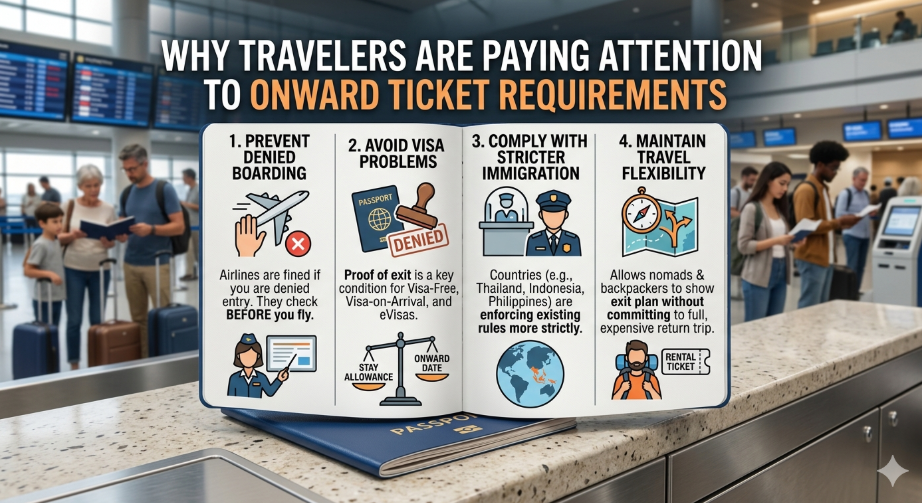
Traveling internationally sounds exciting until an unexpected rule interrupts your journey before it even begins. Imagine arriving at the airport, checking in for your flight, and suddenly being asked for proof that you plan to leave your destination country. Many travelers only learn about this requirement when they are already standing at the airline counter.
For tourists, backpackers, remote workers, and long-term travelers, understanding immigration requirements has become increasingly important. One requirement that often catches people off guard is the need for an onward ticket. While some travelers never face questions about it, others encounter strict airline checks or immigration scrutiny.
The reality is simple: many countries want assurance that visitors will leave before their allowed stay expires. Whether you travel frequently or are planning your first international trip, understanding onward travel requirements can help you avoid delays, stress, and denied boarding.
What Is an Onward Ticket?
An onward ticket is proof that a traveler intends to leave a country within the legal duration of their visa or entry permit. Immigration officers and airlines often request this document to confirm that travelers are not planning to overstay.
An onward travel document can include:
- A return flight home
- A flight booking to another country
- Train tickets in some regions
- Ferry reservations where applicable
For example, if someone enters a country under a tourist visa or visa-free program, authorities may expect evidence showing departure before the permitted period ends.
Although not every traveler gets asked for proof, many countries officially include onward travel in their entry requirements.
See also: Innovation Through Digital Technology
Why Do Countries Require Proof of Onward Travel?
Governments implement immigration rules to manage tourism, security, and visa compliance. Onward travel requirements serve several important purposes.
Preventing Visa Overstays
One of the biggest reasons immigration authorities request proof of onward travel is to reduce overstays.
When travelers arrive without clear plans to leave, immigration officers may become concerned about whether they intend to remain illegally after their visa expires.
By requesting an onward ticket, authorities gain reassurance that visitors understand their travel timeline.
Supporting Border Security
Immigration officers evaluate travel intentions when people enter a country. Travelers who present organized documentation may often experience smoother entry procedures.
Proof of departure helps demonstrate planning and legal travel intentions.
Managing Tourist Entry Policies
Many popular tourist destinations welcome millions of visitors every year but still maintain strict entry requirements.
Countries want to balance tourism growth with immigration compliance, making onward travel proof an important checkpoint.
Why Airlines Often Ask for Onward Tickets
Many travelers mistakenly assume immigration officers are the only people who check travel documentation.
In reality, airlines frequently enforce onward travel requirements before passengers even board their flight.
Why does this happen?
If a traveler is denied entry upon arrival, airlines are often responsible for returning that passenger to their origin country. This can result in financial penalties and logistical complications.
To reduce risk, airline staff may request proof of onward travel during check-in.
This creates a surprising situation for many travelers. Even if immigration officials might never ask for documentation later, airlines may still refuse boarding if required paperwork is missing.
For this reason, experienced travelers often prepare an onward ticket before arriving at the airport.
Countries Known for Enforcing Onward Travel Requirements
Immigration rules vary widely depending on destination, nationality, and visa category. However, several countries are known for frequently requesting proof of onward travel.
Popular examples include:
- Thailand
- Indonesia
- Philippines
- Costa Rica
- Singapore
- Brazil
- New Zealand
In many cases, visa-free travelers or tourists entering for extended stays face more scrutiny.
Travel requirements also evolve regularly, making it important to verify entry policies before departure.
Checking official embassy websites or immigration portals can help travelers avoid surprises.
Challenges for Flexible Travelers
Not everyone travels with a fixed itinerary.
Modern travel habits have shifted significantly, especially with the rise of remote work and digital nomad lifestyles.
Today, many travelers prefer flexibility rather than rigid travel schedules.
Examples include:
- Backpackers traveling through multiple countries
- Digital nomads working remotely
- Freelancers with flexible schedules
- Travelers waiting for visa approvals
- Long-term tourists exploring regions slowly
For these travelers, booking expensive return tickets months in advance may not make practical sense.
Someone traveling across Southeast Asia, for example, may decide their next destination based on budget, weather conditions, or visa opportunities.
In such situations, travelers often explore alternatives that allow flexibility while still satisfying immigration requirements.
Common Ways Travelers Handle Onward Travel Requirements
Travelers typically manage onward travel requirements in several ways depending on their itinerary.
Round-Trip Flights
For short vacations, booking a return ticket is often the easiest solution.
However, this option may feel restrictive for travelers who prefer flexibility.
Refundable Tickets
Some travelers purchase refundable airline tickets to meet travel requirements and later cancel if plans change.
Although convenient, refundable fares may involve higher upfront costs.
Budget Regional Flights
Low-cost airlines in certain regions allow travelers to book inexpensive flights to nearby destinations.
This can provide proof of onward travel without major financial commitment.
Temporary Travel Reservations
Flexible travelers sometimes look into temporary travel booking options to satisfy airline or immigration requests.
Before relying on any method, travelers should always verify whether documentation meets official expectations.
Common Misunderstandings About Onward Travel
Travelers often face problems because of assumptions about immigration policies.
“No One Ever Checks”
Some travelers enter countries without showing proof, but this does not guarantee future travelers will have the same experience.
Enforcement often varies depending on airline policies, nationality, and immigration officer discretion.
“Visa-Free Means No Requirements”
Visa-free travel still comes with entry conditions.
Many countries clearly state onward travel as part of eligibility requirements.
“Having Money Is Enough”
Proof of financial stability and proof of departure are usually separate immigration requirements.
One does not automatically replace the other.
“Immigration Is the Only Concern”
Airline staff frequently enforce onward travel rules before departure, making preparation essential.
How Travelers Can Prepare for International Trips
International travel becomes easier when travelers understand destination requirements beforehand.
Here are practical ways to reduce travel complications.
Research Immigration Policies
Every country maintains different entry regulations.
Official immigration websites are often the most reliable source for updated information.
Confirm Airline Rules
Some airlines apply stricter travel checks than immigration authorities themselves.
Understanding airline expectations can prevent last-minute problems.
Keep Travel Documents Accessible
Store confirmations digitally on your phone or email for quick access during check-in or immigration checks.
Plan for Flexibility
Travel plans can change unexpectedly. Preparing backup travel options helps avoid unnecessary disruptions.
Small preparation efforts can save travelers from significant stress later.
The Growing Importance of Flexible Travel Planning
Travel patterns have changed dramatically over the last decade.
Remote work opportunities, long-term tourism, and digital nomad visas have encouraged more people to embrace flexible travel lifestyles.
As a result, immigration awareness has become more important than ever.
Travelers increasingly seek ways to maintain freedom while staying compliant with international regulations.
Understanding onward travel requirements plays an important role in balancing both goals.
Conclusion
International travel often feels exciting because of the unknown, but preparation still matters. One overlooked travel requirement can quickly turn into a stressful airport experience if travelers are not prepared.
An onward ticket may seem like a small detail, yet it often plays a major role in immigration approval and airline boarding procedures. While fixed vacations make departure planning easy, flexible travelers may need to think more strategically about how they meet onward travel expectations.
By researching destination policies, understanding airline requirements, and preparing documentation in advance, travelers can avoid unnecessary disruptions and enjoy smoother international journeys.