The difference between a roofer worth hiring and one who disappears is rarely visible on estimate day. It shows up in the paper trail, which is why a homeowner comparing reliable roofing companies colorado springs co after a hailstorm should verify a few things before paying a deposit. An established company with a local address, a permit history, and a phone number that works in year five beats the cheapest bid you get this week. That is the whole argument, and the rest of this is how you check it.
Reliable Roofers Leave a Long Paper Trail
Start with what a company cannot fake in an afternoon. Look for a business address you can find on a map, permits pulled under the company’s own name, and reviews stretching back years instead of a cluster from last month. A full-service exterior contractor leaves a wider trail still, since roofing, siding, and paint work keeps crews busy all year. Material mix is part of that record. A July 2026 National Association of Home Builders analysis found vinyl was the most-used exterior wall material on 2025 single-family starts, at 27.7 percent, with stucco second at 24.1 percent. A crew that touches shingles six weeks a year has no reason to know that.
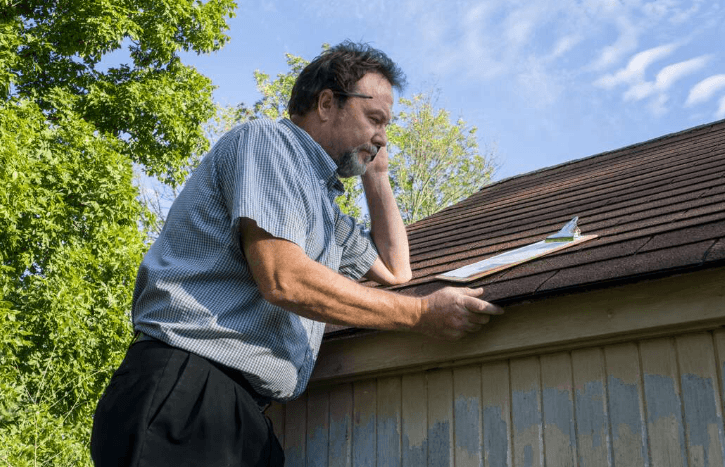
Do not climb up to look at the damage yourself. Falls off roofs send people to the hospital every hail season, and any contractor worth calling will photograph the full slope for you. What usually turns up is a mix of real hail bruising and wear that was already there. An established company will tell you which is which.
Storm Chasers Leave Before Warranties Matter
Ten years ago the storm chaser announced himself plainly. You could spot him by the out-of-state plates, the magnetic door sign, and the flyer in your screen door. Today that same crew buys a local-sounding domain, a Colorado Springs phone number forwarded to a cell, and ads aimed at the hail swath. The pitch arrives looking neighborly, and the work can even look fine at first. Then the season ends, the crew follows the weather to another state, and by November the number goes cold.
The warranty is where that cost lands. A five-year workmanship warranty from a company still operating in year five is a real promise. The same document from a crew that dissolved its LLC in October is paper. Homeowners rarely learn the difference until a leak shows up around a pipe boot two winters later, and that is the moment the whole decision gets graded.
Licensing and Insurance Are Not Optional
Ask for proof, then verify it somewhere other than the contractor’s folder. Licensing rules for roofing vary by state and often by municipality, so call your local building department and ask what a roofing contractor there must carry. Ask for a certificate of general liability and workers compensation coverage, sent by the insurance agent rather than the salesperson. Give them a week to produce it. Call it a week, though honestly a company with a real office turns that around in a day or two. A long delay is itself the answer, and permits are the other half of the question. A contractor who pulls the permit under their own license has put their name on the inspection. One who asks you to pull it as a homeowner has moved the responsibility to you. Ten minutes of checking eliminates most of the field.
Local Track Record Is Easy to Verify
A year past a Front Range hailstorm, the gap between a company with 25 years in town and one with 25 months is easy to measure. Drive past two or three of their finished jobs. Ask which local supply house they buy from, then call and ask how long the account has been open. A company that has worked the same city for decades keeps a service department, a warehouse, and staff known by name at the counter. None of that survives a business model built on chasing weather.
A Warranty Only Helps If They Answer
Read what the warranty covers long before it becomes relevant. Workmanship coverage from the contractor and material coverage from the manufacturer are separate promises, and only one depends on the company still existing. A warranty is worth exactly as much as the odds someone answers when you call. Ask how a claim gets started, who inspects it, and what response time looks like in a busy August.
Material choice sits outside the warranty, which makes it a fair test of whether a contractor will explain a tradeoff. The Florida Solar Energy Center measured terra cotta tile roofs cutting cooling energy use by 3 to 9 percent and white shingles by 3 to 5 percent against standard shingles. Those were Florida test homes, not Colorado ones, so treat the range as direction rather than a forecast at 6,000 feet. Someone who talks through that without a discount clock ticking is showing you how the company works.
See also: Planning a Texas Group Trip? When to Use a Charter Bus Rental
Choosing a Roofer You Can Call Back
Keep everything in one folder: the contract, the permit number, the before and after photos, the warranty, and the name of the crew lead. Then do the thing most homeowners skip and call the company a year later with a small question. That single call is the real test behind every search for reliable roofing companies colorado springs co, and it costs nothing to run. If someone picks up, remembers the address, and offers to come look, the next storm is an inconvenience instead of a second repair bill.