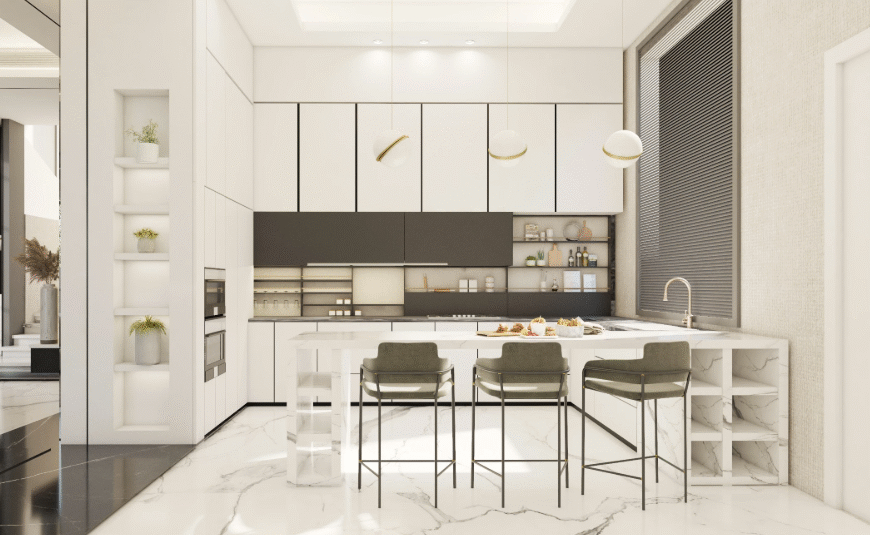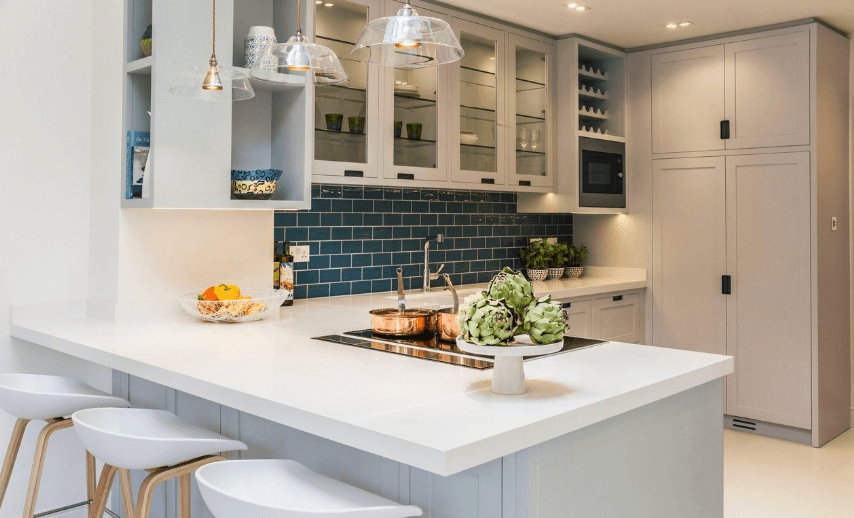
Custom kitchen cabinets transform your space by matching function to how you actually cook, store, and live. Choose materials and features that fit your budget and lifestyle—solid wood or plywood for durability, painted or laminate finishes for low maintenance, and tailored storage solutions to keep countertops clear.
In Custom KitchenYou’ll learn which materials hold up best, which design features expand usable space, and how to balance cost with long-term value so you get cabinets that look great and work harder for you. Keep going to compare durable options and smart layouts that make everyday life easier.
Key Considerations for Choosing Cabinet Materials
Balance cost, appearance, durability, and maintenance when selecting materials. Think about how often you cook, the humidity in your home, and whether you want long-term resale value or a budget-friendly short-term solution.
Solid Wood Versus Engineered Options
Solid wood (maple, oak, cherry) gives you natural grain, stain depth, and the ability to refinish damaged surfaces. Expect higher initial cost and potential for expansion/contraction with humidity; joints and good kiln-dried lumber reduce movement.
Engineered options—plywood, MDF, and particleboard—offer greater dimensional stability and lower cost. Plywood resists warping better than particleboard and holds screws well; use plywood box construction for lasting cabinets.
MDF provides a smooth substrate for painted or thermofoil surfaces but swells at exposed edges if not properly sealed. Choose solid wood for visible doors and engineered cores for cabinet boxes to get a practical mix of appearance and performance.
Moisture Resistance and Durability
Kitchen humidity, steam, and occasional spills determine material longevity. Plywood and marine-grade or exterior-grade plywood resist delamination and hold up in humid areas better than particleboard.
Sealed finishes, edge banding, and full-overlay doors reduce water infiltration at vulnerable seams. Hardware quality—soft-close hinges, full-extension drawer slides—affects wear more than many material choices.
For heavy-use kitchens, specify plywood boxes, solid-wood or well-sealed MDF doors, and protective finishes (catalyzed lacquer or modern two-part acrylics) to minimize swelling, staining, and surface wear over time.
Eco-Friendly and Sustainable Choices
Look for FSC-certified wood to ensure responsible forest sourcing; this matters if you prioritize environmental impact. Low-VOC finishes and formaldehyde-free MDF or CARB-compliant plywood reduce indoor-air concerns.
Reclaimed wood or salvaged cabinetry lowers embodied carbon and adds unique character, but inspect for structural soundness and prior treatments.
If budget limits you, choose durable engineered materials that last longer to avoid premature replacement; longevity often yields a smaller environmental footprint than cheaper, short-lived options.
Design Features That Maximize Your Space
Smart cabinet planning focuses on usable storage, efficient access, and visual openness. Prioritize pull-outs and vertical storage, choose finishes that reflect light, and match door and hardware choices to how you use the kitchen.
Storage Solutions and Accessories
Install full-extension pull-out drawers in lower cabinets so you reach pots and pans without digging. Use deep drawers with adjustable dividers for stacking lids and nesting cookware; label zones to keep items where you expect them.
Add vertical dividers for baking sheets and cutting boards inside tall cabinets to prevent wasted flat space. Fit corner cabinets with rotating carousels or pull-out swing systems to convert dead corners into accessible storage.
Use under-shelf baskets, toe-kick drawers, and appliance garages to create hidden storage that keeps countertops clear. Include a pull-out trash and recycling bin near prep zones to streamline cleanup.
See also: Handyman Services: Expert Home Repairs and Maintenance Guidance
Color and Finish Selection
Choose light, semi-gloss finishes on uppers to bounce light and make the space feel larger. Matte or textured finishes on lower cabinets hide wear while keeping contrast that defines cabinet zones clearly.
Match cabinet color to countertop tone to create visual continuity and reduce perceived clutter. Use reflective materials—glass-front uppers or high-gloss backsplashes—strategically to add depth without sacrificing usable storage.
Select finishes that resist stains and are easy to clean, such as polyurethane or lacquer. Prioritize long-lasting surface coatings if you cook frequently; they preserve appearance and minimize maintenance.
Door Styles and Hardware Options
Pick slab or shaker doors for a streamlined look that reduces visual busyness in small kitchens. Flat-panel doors paired with integrated pulls or recessed grips keep profiles sleek and prevent protrusions into walkways.
Choose soft-close hinges and full-extension drawer slides for smooth, quiet access that protects contents. Use easy-grip handles on frequently used cabinets and slim bar pulls on less-accessed doors to create a clear tactile hierarchy.
Consider glass-front doors on selective uppers to display regularly used items and break up solid masses. Use magnetic catches or push-to-open mechanisms on minimal-look cabinets to avoid large hardware that interrupts sightlines.