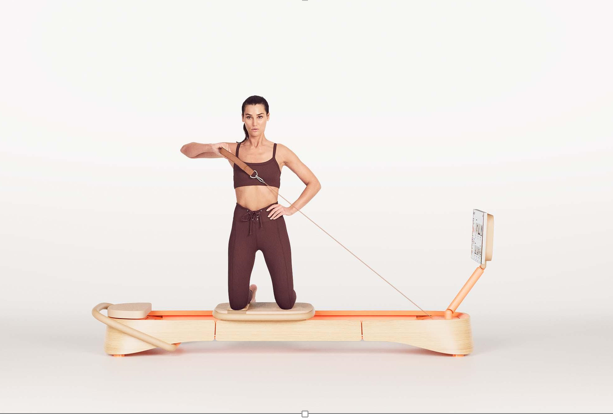
A Pilates exercise machine can add resistance, support, and movement variety to a home workout routine. Unlike mat exercises that primarily rely on body weight, machine based Pilates allows you to work against adjustable resistance while controlling the movement of a carriage, platform, or other components.
The right equipment depends on the type of Pilates you want to practice, your available space, experience level, and how often you expect to train. A machine that works well in a dedicated home gym may not be practical in a bedroom or shared living space. Similarly, someone learning the fundamentals may need a simpler setup than an experienced practitioner who wants to perform a broader range of exercises.
Understanding the different features before purchasing can make it easier to choose equipment that fits both your workout goals and your home.
What Is a Pilates Exercise Machine?
The term Pilates exercise machine can refer to several types of equipment designed to support Pilates movements through resistance, stability, or controlled motion.
The reformer is one of the most recognizable examples. It typically includes a moving carriage, springs, footbar, shoulder rests, and straps. Other Pilates equipment includes the Cadillac or tower, Pilates chair, and barrel based equipment.
Each type serves a different purpose.
A reformer is particularly versatile because the springs can create adjustable resistance while the carriage allows exercises to be performed in different positions. A chair takes up less floor space and can challenge balance and strength through a smaller platform. Tower systems add resistance and support through springs attached to a vertical frame.
Before buying equipment, identify which movements you want to perform rather than choosing based only on the machine’s appearance.
See also: Balancing Techniques That Extend Equipment Life
Why Use Pilates Equipment at Home?
Home equipment can make regular Pilates practice more convenient.
You do not have to travel to a studio for every session, and the equipment can remain available whenever you have time to exercise.
A machine can also provide more resistance options than a basic mat routine.
For example, springs can make a leg exercise more demanding, assist a stretch, or provide resistance during arm movements. The same equipment can therefore be used for different types of sessions.
However, having equipment at home does not automatically create a better workout. Technique, appropriate resistance, exercise selection, and consistency still matter.
Reformer Machines for Full Body Training
A reformer is one of the most versatile choices for home Pilates.
The moving carriage creates an additional stability challenge, while the spring system provides adjustable resistance.
Exercises can target:
- Legs
- Glutes
- Hips
- Abdominal muscles
- Back
- Shoulders
- Arms
A typical session can begin with footwork, move into hip and core exercises, and finish with upper body or mobility movements.
The ability to change resistance also allows the same machine to accommodate different exercises and experience levels.
A beginner can start with basic movements and lighter resistance, while an experienced user can progress to more demanding variations.
Pilates Chairs for Smaller Workout Areas
A Pilates chair can be a practical option for people with limited floor space.
It has a smaller footprint than a reformer, although the exercises performed on it can still be demanding.
The chair can support movements that challenge:
- Leg strength
- Core stability
- Balance
- Hip control
- Upper body strength
Because the platform is relatively small, some exercises require greater balance and coordination.
For this reason, beginners should learn the basic movements before attempting more challenging standing exercises.
Tower Systems for Resistance Training
A Pilates tower adds a vertical resistance component to a Pilates setup.
Springs can be attached at different heights, depending on the equipment and exercise.
This can create options for:
- Arm work
- Leg exercises
- Core training
- Mobility
- Stretching
- Assisted movement
A tower may be useful for experienced Pilates users who want more exercise variety, but it requires suitable wall or floor space depending on the design.
Before purchasing, check the installation requirements and make sure the equipment is appropriate for the intended room.
How Resistance Changes the Workout
Resistance is one of the main reasons people choose Pilates equipment rather than relying entirely on mat exercises.
On a spring based machine, the resistance can be adjusted according to the exercise.
A heavier setting can increase the challenge during certain strength exercises.
A lighter setting may provide more freedom of movement or assistance during some exercises.
The correct resistance is not necessarily the heaviest available.
If resistance causes you to lose control or change your alignment, reduce it.
Pilates emphasizes controlled movement, so the ability to maintain proper positioning is more important than simply increasing resistance.
Choosing Equipment Based on Your Experience
Your experience level should influence the equipment you buy.
Beginners
A beginner may benefit from equipment that is straightforward to adjust and easy to understand.
Important features include:
- Clear instructions
- Stable construction
- Comfortable support
- Simple resistance adjustments
- Suitable dimensions
There is no need to purchase every accessory at the beginning.
Learning the basic movements and equipment setup should come first.
Experienced Users
Experienced practitioners may have more specific requirements.
They may want:
- More resistance options
- Additional spring configurations
- Greater adjustment range
- Accessory compatibility
- More exercise variations
- Equipment suitable for frequent use
The best choice depends on the exercises you already know and the type of training you want to continue at home.
Measure Your Space Before Buying
A machine can look compact online while requiring considerable room during actual use.
Measure the equipment’s length and width, but also consider the surrounding space.
You need room for:
- Mounting and dismounting
- Arm movement
- Leg movement
- Straps
- Footbar adjustments
- Moving the carriage
- Storing accessories
If you plan to fold or store the machine after each workout, measure the storage area as well.
Do not forget doorways and pathways if the equipment will need to be moved.
Consider Your Body Size
Equipment dimensions should work with your body.
Tall users may need a longer carriage or greater adjustment range.
Shorter users may require different footbar and strap positions.
If more than one person will use the machine, adjustable components become particularly useful.
Check the manufacturer’s recommended user height range and maximum user weight before purchasing.
If your measurements fall outside the listed specifications, contact the manufacturer rather than assuming the equipment will be suitable.
Look at the Carriage
For reformer style equipment, the carriage deserves close attention.
It should move smoothly and remain stable throughout the exercise.
A comfortable carriage can make a noticeable difference when you are performing longer sessions.
Look at:
- Padding
- Carriage dimensions
- Shoulder rests
- Headrest
- Wheels or bearings
- Movement noise
If possible, test the equipment before buying.
A few minutes of use can reveal whether the carriage feels stable and comfortable for your body.
Check the Footbar
The footbar is involved in many reformer exercises.
An adjustable footbar can accommodate different body proportions and movement patterns.
Look for a mechanism that is easy to adjust and secure once positioned.
The footbar should remain stable when you apply pressure through your feet.
If multiple people will use the equipment, several adjustment positions can make the setup more practical.
Consider Storage
Storage can determine whether you use the machine regularly.
If the equipment remains permanently assembled, make sure the room has enough space to keep it accessible.
If you need to store it, consider:
- Folded dimensions
- Machine weight
- Wheels
- Handles
- Storage orientation
- Ease of movement
A heavy machine that has to be moved after every session may become inconvenient.
Choose a storage system that fits your actual home rather than relying on the product’s advertised compactness.
Accessories Can Expand Exercise Options
Some Pilates machines can accommodate additional equipment.
Depending on the model, you may find:
- Pilates boxes
- Jump boards
- Additional springs
- Handles
- Straps
- Tower attachments
Accessories can add exercise variety, but they are not automatically necessary.
Think about the movements you plan to perform before buying additional equipment.
A beginner may have little use for advanced accessories, while an experienced user may already know which attachments are relevant to their routine.
Build Workouts Around Different Goals
A machine can support several types of sessions.
Strength
Use appropriate spring resistance and controlled movements to challenge the legs, hips, arms, and core.
Mobility
Use supported movements and a comfortable range of motion to work on joint movement and flexibility.
Balance
Standing exercises can challenge stability and coordination.
Core control
Carriage based exercises can require the trunk to remain stable while the limbs move.
Full body training
Combine lower body, upper body, and core exercises in the same session.
Changing the focus between sessions can make home training more varied without requiring different machines.
Start With Foundational Movements
Beginners should not begin with the most difficult exercises available.
Learn how to:
- Adjust resistance
- Position the footbar
- Mount and dismount
- Control the carriage
- Use straps
- Maintain alignment
Once these fundamentals become familiar, more challenging exercises can be introduced gradually.
A qualified instructor can help demonstrate proper setup and technique, particularly when someone is new to machine based Pilates.
Maintain the Equipment
Moving components need regular inspection.
Depending on the machine, check:
- Springs
- Ropes
- Straps
- Wheels
- Bearings
- Footbar hardware
- Carriage components
Follow the manufacturer’s maintenance instructions.
If a spring, rope, strap, or other component shows visible damage, stop using the equipment until it has been inspected or replaced according to the manufacturer’s guidance.
Create a Dedicated Workout Area
You do not necessarily need a separate gym room.
A clear area with enough space around the machine can work well.
Keep furniture, cables, and other objects away from the active workout zone.
Good lighting can make it easier to monitor your positioning.
Store accessories where they are easy to reach without creating clutter around the machine.
The simpler the setup, the easier it can be to start a workout without spending unnecessary time preparing the room.
How Often Should You Use Pilates Equipment?
Training frequency depends on your experience, workout intensity, and recovery.
Someone new to Pilates may start with a few sessions each week.
More experienced users may train more frequently while varying the intensity.
Not every workout needs to be demanding.
A weekly schedule could include full body sessions, strength focused workouts, mobility sessions, and lighter practice.
Pay attention to how your body responds and allow adequate recovery after demanding sessions.
Common Buying Mistakes
Several mistakes can make an otherwise suitable machine a poor fit.
Buying without measuring
A machine that does not fit the room will be difficult to use consistently.
Choosing the most expensive option automatically
Higher cost does not guarantee that the equipment suits your needs.
Ignoring user dimensions
Carriage length, footbar position, and weight capacity should match the intended user.
Buying unnecessary accessories
Extra equipment is useful only when it supports the workouts you plan to perform.
Focusing only on resistance
A large resistance range is useful, but carriage movement, comfort, stability, and adjustability matter too.
Forgetting maintenance
Moving components require inspection and care.
Questions to Ask Before Purchasing
Before choosing a Pilates machine, consider:
- How much space do I have?
- Will the equipment remain assembled?
- Who will use it?
- What is my current experience level?
- Which exercises do I want to perform?
- Do I need adjustable resistance?
- Is the carriage long enough?
- Is the footbar adjustable?
- What is the maximum user weight?
- Are replacement parts available?
- What maintenance is required?
- What does the warranty cover?
Answering these questions can help narrow the options based on practical requirements rather than marketing claims.
FAQ
What is a Pilates exercise machine?
A Pilates exercise machine is equipment designed to support Pilates movements through resistance, stability, or controlled movement. Reformers, Pilates chairs, and tower systems are common examples.
Is Pilates equipment suitable for beginners?
Yes. Beginners can use Pilates equipment when they learn the correct setup and foundational movements. Professional instruction can be helpful when starting.
Which Pilates machine is best for home use?
The right machine depends on your space, experience, workout goals, body dimensions, storage requirements, and desired exercise variety.
Does Pilates equipment build strength?
Pilates equipment can provide adjustable resistance that challenges muscles during controlled movements. The amount of resistance and exercise selection influence the level of challenge.
Can Pilates machines help with flexibility?
Certain equipment based exercises can support controlled stretching and mobility work. Movements should remain within a comfortable range rather than being forced.
How much space is needed for a Pilates machine?
The required space depends on the equipment. Measure both the machine and the clearance needed for movement, mounting, dismounting, and accessories.
Do I need accessories with a Pilates machine?
Not necessarily. Many exercises can be performed with the standard equipment. Additional accessories are useful when they support specific movements or training goals.
How should Pilates equipment be maintained?
Follow the manufacturer’s instructions and regularly inspect springs, ropes, straps, wheels, bearings, and adjustable components for wear or damage.