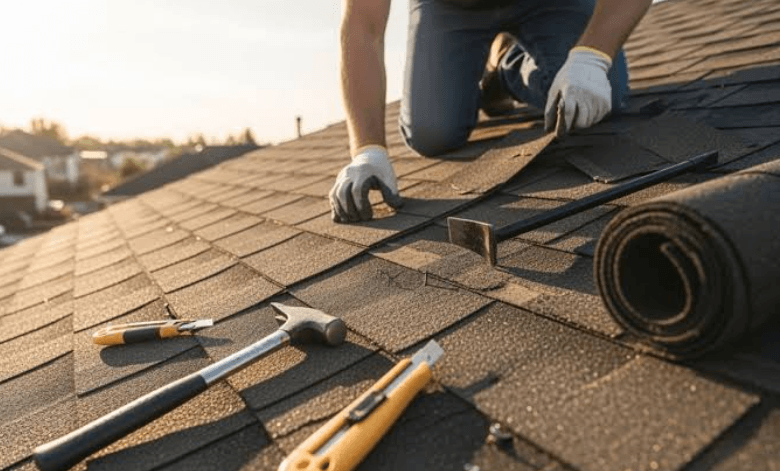
The lowest roof bid is rarely the dishonest one. It is usually a different job. A first-time buyer of a 1950s bungalow on Cincinnati’s west side gathers three estimates for the same 18 squares of roof and gets back roughly $9,000, $14,500 and $24,000, which reads like proof that somebody is running a con. Nobody has to be. The cheap sheet quietly assumes the old shingles stay where they are, the middle one includes stripping the roof down to the wood, and the top one adds new decking plus a manufacturer-backed warranty, which is what makes choosing among local roofers cincinnati oh so hard the first time you do it. Price is not the information you are missing. Scope is.
An outside baseline makes the spread easier to read. In a June 2026 survey of 1,000 homeowners, This Old House put the average asphalt shingle installation on a standard 2,000-square-foot home at about $10,042, with labor accounting for roughly 65 percent of the total. Two-thirds of a roof price is people and hours, not product. So when one estimate sits $15,000 above another on the same house, the honest explanation is almost always a difference in how much work each crew thinks the roof needs, and the dishonest explanation is that one of them plans to skip that work and hope nobody ever looks.
Two Bids For The Same Roof Rarely Match
Start with tear-off, since it is the single line that moves the number most. Stripping the old layer down to the wood means labor, a dumpster, disposal fees and a full day when the crew installs nothing at all. Laying new shingles over the top of the old ones removes every bit of that, which is how a bid on this house lands near $9,000. It also seals up whatever the old layer was hiding. Two of your three bidders may be pricing a tear-off and the third may not, and unless the estimate says so in plain words, you cannot tell which is which.
What usually turns up once the old roof comes off is soft decking, and it is the line that goes missing from cheap bids job after job. Nobody can quote it accurately in advance, because nobody can see the wood through the shingles. A reasonable estimate names a per-sheet price and a rough allowance rather than pretending the question will not come up. Say six sheets of plywood at $85 apiece, which is about $510. Call it closer to $700, honestly, once you count the crew’s time to cut and fit them around rafters that were framed in 1954. A bid carrying no decking line at all is not cheaper. It is unfinished.
Two more lines separate paperwork that means something from paperwork that does not. The first is underlayment, the water-resistant sheet that goes down over bare wood before any shingle does, and across 18 squares the gap between basic felt and a synthetic product is real money. The second is manufacturer certification, because the long warranties printed on shingle wrappers are usually honored only when a credentialed installer does the work and registers the job afterward. A contractor holding a credential such as Owens Corning Platinum Preferred will put it on the estimate, while one who does not will talk about the shingle brand without ever naming who honors the warranty.
Ask These Questions Before Anyone Starts Tearing Off
Four questions do most of the sorting, and none of them require knowing anything about roofing. The local roofers Cincinnati OH homeowners keep recommending to each other tend to answer all four on the spot, usually with numbers attached. A contractor who gets vague, or who changes the subject to financing and offers a discount for signing today, has told you something useful about the estimate in your hand.
- Does this price include a full tear-off, and how many layers are coming off? A good answer names the layer count and the disposal cost as separate figures.
- What happens if you find rotten decking, and what do you charge per sheet? A good answer gives a dollar amount per sheet before work starts, not after.
- Which underlayment and which shingle line are you installing, by product name? A good answer names both and hands over the manufacturer spec sheet.
- Are you certified by the shingle manufacturer, and who registers the warranty? A good answer names the credential and confirms the contractor files the paperwork.
Ask for the certificate of insurance as well, and call the carrier on it instead of trusting the copy you were handed. Licensing and coverage rules for roofers vary by state and sometimes by municipality, so check what Ohio and your own city actually require rather than assuming a contractor is covered. One thing does not vary. Do not climb up to inspect the work yourself, because falls are the leading cause of death in residential roofing and a homeowner on a driveway ladder is the most avoidable version of that risk. Ask the crew lead for photos of the decking and the flashing instead, which any well-run job produces anyway.
See also: Sofas: The Center of a Comfortable Home
The Bid That Explains Itself Is The Safer Buy
Set the three numbers side by side again once the questions have answers, and the spread usually collapses. The $9,000 sheet turns out to be new shingles over old ones, with no decking allowance and nothing standing behind the warranty. The $24,000 sheet may cover a full tear-off, replaced decking, synthetic underlayment, a ridge vent and a registered fifty-year warranty, which is a different roof rather than a markup. Most of these land in the middle once everything is written down, and it is worth noticing how close that middle number sits to the $10,042 national average for a house considerably larger than this bungalow.
Here is the whole argument in one line. A written, itemized bid from a nearby full-service roofer is worth more than a lower number that explains nothing, because it is the only one you can check line by line and hold someone to later. Proximity matters more than it sounds, since a company that drives across town when a seam leaks in February behaves differently than one that has to drive across the state. The paper does the talking. Ask for it in writing, read the lines rather than the total, and choose the bid that told you the most.