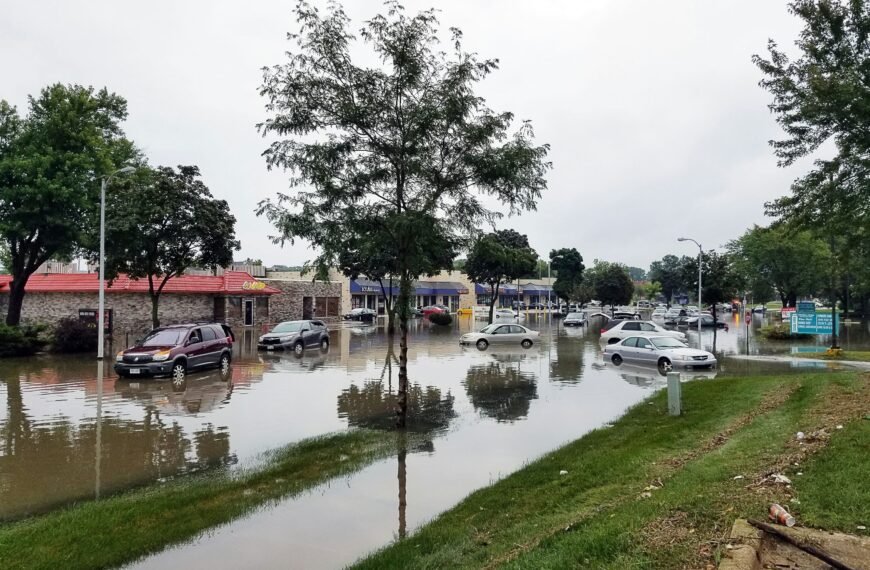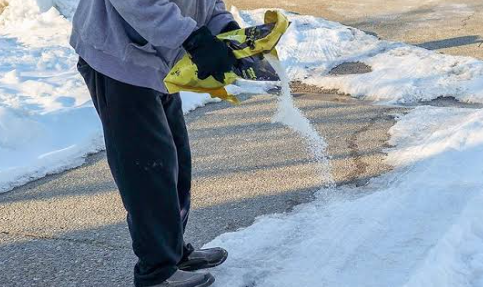
A homeowner off Pilgrim Road poured a fresh driveway the last week of October and kept it clear all winter with hardware store rock salt. By the first warm week of April, the surface was lifting off in flakes the size of quarters. The slab under it was perfectly solid. Only the top layer failed, and that is the spring phone call concrete contractors brookfield wi homeowners make more than any other. New concrete does not fail its first winter because Wisconsin gets cold. It fails because de-icing salt lands on a surface that has not finished curing.
That distinction matters, because one of those is weather and the other is a decision somebody made in December. Protecting a fresh pour through its first freeze season costs a few hundred dollars and one Saturday afternoon. Replacing the surface later costs thousands.
Freeze Thaw Cycling Does The Real Damage
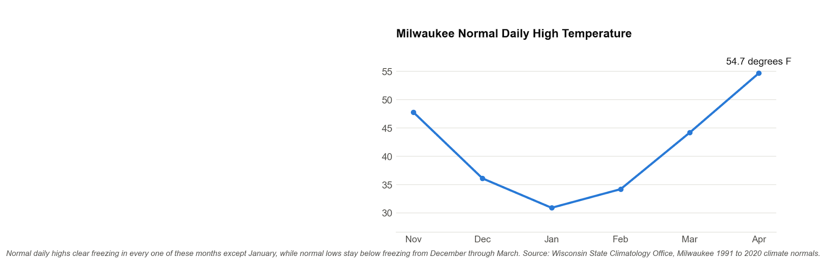
Water expands as it freezes, and cured concrete stays porous enough to hold plenty of it. Every time moisture in the top few millimeters freezes and releases, it works at the paste binding sand and stone together. Southeastern Wisconsin runs that cycle over and over, and the 1991 to 2020 station normals kept by the Wisconsin State Climatology Office put Milwaukee’s normal daily high at 36.1 degrees in December and 44.2 in March. Normal lows for those two months sit at 23 and 28.7. Afternoon melt, overnight freeze, repeat.
Air-entrained concrete absorbs that punishment the way a parking garage with a few open stalls absorbs a rush. The mix carries millions of microscopic bubbles, and freezing water pushes into those instead of against the paste. Exterior mixes here should come off the truck with roughly 6 percent entrained air, and a driveway poured without that protection is on the clock from its first thaw, whether or not anybody ever spreads a handful of salt across it. What usually turns up on a scaling call is not a bad mix. It is a good slab that got salted too early.
New Concrete Needs A Salt Free First Winter
Concrete keeps gaining strength for weeks after the finishers pack up, and the surface toughens last. The concrete contractors Brookfield WI homeowners hire for late-season work tend to say the same thing about de-icer, which is not this year. Chlorides pull extra water into the pore structure and raise the number of freeze events the surface has to survive. Sand gives you traction with none of that chemistry.
Rock salt is also hard on the arborvitae most people line a driveway with, and on a dog’s feet. That is a side argument, though, and the slab is the expensive part. A pour that goes down after October should get through one full winter untouched by de-icer. Then it takes a penetrating siloxane sealer, once the slab has had about a month to cure. Sealer is not paint, and most products want a refresh every two or three years.
See also: Why Charter Bus Trips To New York City Are Perfect For Large Groups
Prevention Costs Less Than A Second Pour
Run the numbers on an average two-car drive, say 620 square feet. A 5 gallon pail of penetrating sealer runs near $120 and covers roughly 250 square feet, so two coats means three pails at $360. Add $40 for a pump sprayer and call it $400. Grinding and resurfacing that same driveway after the top layer scales, at a hypothetical $6 per square foot, comes to $3,720. A tear out and repour at $11 a foot lands closer to $6,820. The comparison is not close.
Material prices are not helping the replacement side of that ledger. Ready-mix concrete ran 1.7 percent higher in May 2026 than a year earlier, per an analysis of federal producer price data published in June 2026. That is a modest bump by itself, and it compounds against every other line on a replacement quote. A sealer budget stays fixed, while the alternative moves with the market.
The first winter decides how a driveway looks in year ten. Keep the de-icer off it, spread sand when the walk gets slick, and seal the concrete once it has had its month. Do that and the same slab that flakes on a neighbor’s property stays tight and even for two decades. Skip it, and the bill arrives in April.