Introduction
For more than a decade, smartphones have been at the center of our digital lives. They allow us to communicate, work, shop, navigate, and entertain ourselves with just a few taps. However, as technology continues to evolve, a new category of wearable devices is gaining attention. Smart glasses are becoming more advanced, offering hands-free access to information, augmented reality experiences, and AI-powered assistance that could change the way people interact with technology.
As leading technology companies invest heavily in wearable computing, many experts believe smart glasses could become the next major computing platform. But can they truly replace smartphones? Understanding the capabilities, advantages, and challenges of smart glasses provides a clearer picture of what the future may hold.
What Are Smart Glasses?
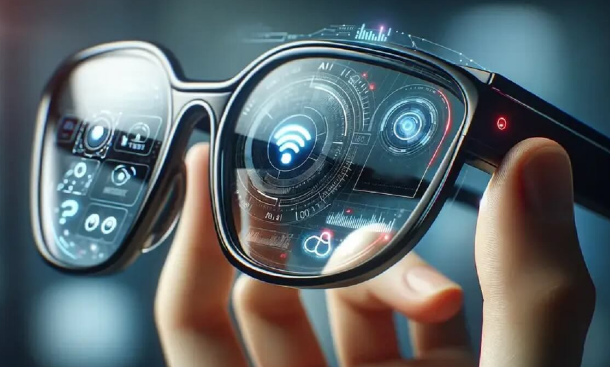
Smart glasses are wearable devices that combine traditional eyewear with advanced digital technology. Unlike ordinary glasses, they feature built-in displays, cameras, microphones, speakers, sensors, and artificial intelligence. These features allow users to receive notifications, navigate with augmented reality, capture photos and videos, make calls, translate languages, and interact with digital content without holding a device in their hands.
Modern smart glasses are designed to make technology more accessible by displaying useful information directly within the user’s field of vision.
Why Smart Glasses Are Becoming More Popular
The growing popularity of smart glasses is driven by improvements in artificial intelligence, augmented reality, battery technology, and lightweight hardware. Earlier generations of wearable devices struggled with bulky designs and limited functionality, but today’s models are becoming smaller, more comfortable, and significantly more powerful.
Consumers are increasingly interested in hands-free technology that allows them to stay connected while walking, working, traveling, or exercising. Businesses are also adopting smart glasses for training, remote collaboration, healthcare, manufacturing, and field services because they improve productivity without interrupting daily tasks.
Artificial Intelligence Is Transforming Smart Glasses
Artificial intelligence has become one of the biggest reasons smart glasses are evolving so quickly. AI assistants built into wearable devices can answer questions, summarize information, translate conversations in real time, recognize objects, provide navigation, and respond to voice commands almost instantly.
Instead of reaching for a smartphone, users can simply speak naturally to their AI assistant and receive immediate answers displayed within the glasses. This creates a faster and more seamless digital experience.
As AI continues to improve, smart glasses will become even more personalized by learning user preferences, predicting needs, and delivering relevant information at the right moment.
The Role of Augmented Reality
Augmented reality is another key technology driving the future of smart glasses. Unlike virtual reality, which creates a completely digital environment, augmented reality places digital information on top of the real world.
This allows users to see navigation directions while walking, receive product information while shopping, identify landmarks during travel, or access work instructions while repairing equipment. Students, healthcare professionals, engineers, and designers are already benefiting from augmented reality applications that improve learning and workplace efficiency.
As software becomes more sophisticated, augmented reality will become an everyday tool rather than a specialized technology.
Can Smart Glasses Replace Smartphones?
Although smart glasses continue to improve, completely replacing smartphones remains a significant challenge. Smartphones still offer larger displays, powerful processors, extensive app ecosystems, high-quality cameras, and reliable battery life. Many activities, such as editing documents, watching movies, gaming, or completing detailed work, remain more practical on a smartphone.
However, smart glasses are becoming increasingly capable of handling everyday tasks like messaging, navigation, phone calls, internet searches, language translation, reminders, and AI-powered assistance. For many quick interactions, users may no longer need to remove their phones from their pockets.
Rather than replacing smartphones immediately, smart glasses are more likely to work alongside them during the next several years.
Challenges Facing Smart Glasses
Despite impressive technological progress, smart glasses still face several obstacles before achieving mainstream adoption. Battery life remains limited because compact devices must power displays, cameras, wireless connectivity, and artificial intelligence simultaneously.
Privacy concerns also continue to influence public acceptance. Built-in cameras and microphones raise questions about recording conversations and collecting personal data. Manufacturers must balance innovation with transparent privacy protections to build consumer trust.
Cost is another important factor. Premium smart glasses remain expensive compared to traditional eyewear, making them less accessible for many consumers. As manufacturing improves and competition increases, prices are expected to become more affordable.
Industries That Will Benefit Most
Smart glasses are expected to transform multiple industries beyond consumer technology. Healthcare professionals can access patient information without leaving the examination room. Engineers can receive interactive repair instructions while working on complex equipment. Warehouse employees can improve inventory management through hands-free guidance, while educators can create immersive learning experiences using augmented reality.
Retail businesses, tourism companies, logistics providers, and manufacturing organizations are also exploring wearable technology to improve efficiency, customer service, and employee productivity.
The Future of Mobile Technology
The future of personal technology is likely to involve multiple connected devices working together rather than relying on a single product. Smartphones, smart glasses, smartwatches, and AI assistants will operate as part of an integrated ecosystem that provides seamless access to information across different situations.
As artificial intelligence becomes more powerful and wearable hardware continues to shrink, smart glasses may eventually become the primary interface for everyday digital interactions. Voice commands, gesture recognition, eye tracking, and contextual AI could reduce the need to constantly look at smartphone screens.
See also: Explore New York City in Style with Luxury Bus Rental NYC Services
Conclusion
Smart glasses represent one of the most exciting developments in wearable technology. By combining artificial intelligence, augmented reality, voice control, and real-time information, they offer a glimpse into a future where technology becomes more natural, intuitive, and hands-free.
While smartphones are unlikely to disappear anytime soon, smart glasses are steadily taking over many tasks that once required a mobile device. As technology continues to improve and prices become more affordable, wearable computing could redefine how people communicate, work, learn, and interact with the digital world. The future may not be about replacing smartphones entirely, but about creating a smarter and more connected way of experiencing everyday life.