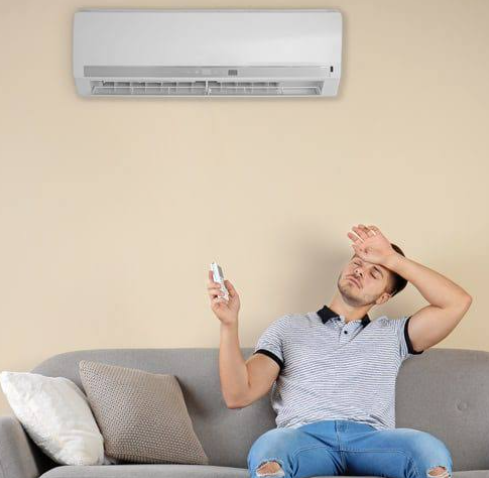
It is the second week of July in Southampton, the downstairs thermostat reads 72, and the bedroom over the garage is stuck at 80. Calls like that reach an hvac company southampton pa dispatcher a dozen times a summer, and the homeowner almost always opens with the same theory. The unit must be too small. The measurements usually say otherwise, and the argument of this piece is a simple one that runs against the instinct. A hot upstairs is a sizing and airflow problem, so the money does more good in a right sized high efficiency system than in extra tonnage. CBS News reported in June 2026 that households are projected to spend nearly $800 on electricity between June and September, up 10.5% from a year earlier.
Bigger Equipment Makes The Upstairs Worse
An oversized air conditioner cools the hallway around the thermostat quickly and then shuts itself off. Twelve minutes of run time will not pull much moisture out of the air, so the house lands at 74 degrees and still feels sticky to everyone in it. Rooms far from the air handler never get enough minutes of airflow to catch up. The case we see most often in Bucks County split levels is a four ton condenser bolted onto a house that calculates out near two and a half. A system like that spends the whole summer sprinting and never finishing the race. Short cycling punishes the compressor and the contactor, which is why a nine year old oversized unit often quits before a right sized one twice its age.
A Load Calculation Beats A Rule Of Thumb
The old shortcut was 500 square feet per ton, which drops a three and a half ton system onto an 1,800 square foot split level before anyone opens a tape measure. A room by room Manual J load calculation counts window area and orientation, insulation depth, duct location, air leakage, and how many people sleep upstairs. Run that same house with replacement windows and eight inches of attic insulation and the number often lands near two and a half tons. Any HVAC company Southampton PA homeowners call should hand over the worksheet, not only the tonnage printed at the bottom of it. If a proposal shows up without one, ask what outdoor design temperature was used and whether anyone measured the ducts.
Federal Credits No Longer Carry The Upgrade
Five years ago a high efficiency quote leaned hard on incentives, and the kitchen table conversation was mostly about paperwork. The IRS says its Energy Efficient Home Improvement Credit allowed up to $600 for a qualifying central air conditioner. That credit applied to property placed in service before the end of 2025, and the window has since closed. The return on a better system now comes from the equipment itself, the quality of the install, and the rate you actually pay per kilowatt hour. Tax treatment varies by household and by year, so run any credit question past whoever prepares your return rather than trusting a sales sheet. Utility rebate programs shift season to season, and a contractor should be able to show what is live the week you sign.
Ductwork Decides What The Second Floor Gets
New equipment cannot force air through a duct system that was undersized in 1968. Residential blowers are commonly rated near 0.5 inches of water column of total external static pressure. The systems we measure in older two story homes read closer to 0.9, which means the blower is fighting nearly twice the resistance it was built for. No efficiency rating on the box makes up that difference. Panned joist returns and one undersized hallway return are the usual causes, along with flex runs crushed behind attic storage. Half the comfort complaints in these neighborhoods trace back to insulation rather than equipment, and insulation is usually the cheaper fix of the two. That belongs in another article though, so back to the ducts. Adding a second floor return and correcting the trunk line often does more for that 80 degree bedroom than any change in tonnage. If the evaporator coil sits on top of a gas furnace, one safety rule travels with it. When a carbon monoxide alarm sounds, get everyone outside and call 911 before anybody touches the system.
See also: Planning a Texas Group Trip? When to Use a Charter Bus Rental
What The First Season Actually Looks Like
Expect the first week to feel odd, because the unit will not shut off the way the old one did. A right sized variable speed system runs long and quiet at partial capacity instead of blasting and stopping. By week three the humidity reading tells the story, and a house that sat at 58 percent should be closer to 48. The two thermostats should also land within a couple of degrees of each other on a 90 degree afternoon. Within 60 days you have a full billing cycle to hold against last year, adjusted for how hot the month actually ran. Month three is when the ductwork verdict arrives, since any room still lagging by then is telling you plainly that the air is not reaching it. Call the installer back at that point, while the job is fresh and the crew still remembers the house.
Sizing Buys Comfort That Tonnage Cannot
The homeowner with the 80 degree bedroom does not need a bigger condenser outside. They need somebody to measure the house and the duct system before anyone quotes equipment. Ask for the load calculation and the measured static pressure reading. Then ask what the plan is for the second floor return, and get that answer in writing. A contractor who puts those numbers on paper is worth more than the lowest figure in a stack of proposals, because the difference shows up every July for the next fifteen summers.