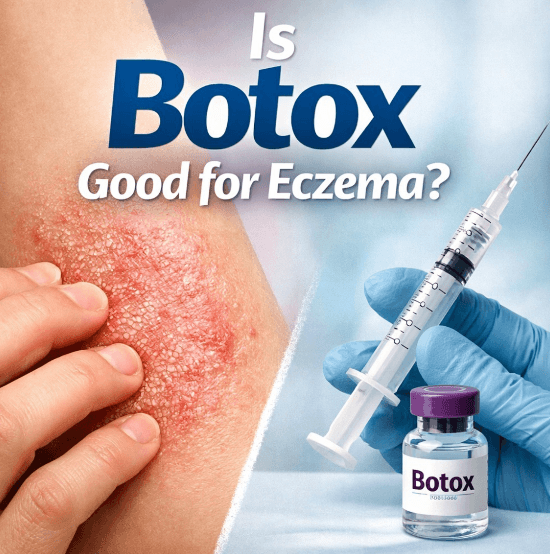
Struggling with stubborn eczema that won’t respond to steroids and creams? Surprisingly enough, Botox is under consideration as a possible treatment.
Although Botox is known to relax wrinkles, researchers are also finding it possible to use it in treating patients with severe eczema to relieve chronic itch and inflammation. This guide describes what the treatment says, who may benefit, and what you need to know before considering this off-label treatment.
Understanding Eczema (Atopic Dermatitis)
(Atopic Dermatitis), Eczema is a skin condition that causes dry, itchy, inflamed patches of skin that can appear anywhere on the body. The most common type is atopic dermatitis.
Common Symptoms
- Severe itching that disturbs sleep.
- Red, swollen, cracked skin
- Repeated flare-ups caused by allergens, stress, or weather.
- Scars on the skin due to scratching.
Common therapies are effective for most people, yet there are instances where individuals are resistant to therapy. It is at this point that some new methods, such as Botox, come in.
Clinical Evidence for Botox in Eczema
Recent research offers good evidence concerning the use of Botox in the treatment of some eczemas.
| Study | Participants | Results | Key Finding |
| SCORAD Study (2020) | 26 patients | SCORAD dropped from 50.5 to 11 points | 64.1% excellent response |
| German Hand Eczema | 8 patients | DASI score: 36 to 3 with Botox | 12x improvement vs steroids alone |
| Edinburgh Case | 1 patient | 10-year itch relief for 6 months | Significant symptom reduction |
A 2020 study found that 78.9% of severe eczema patients achieved excellent results with Botox treatment. Quality of life scores improved by 43.5%.
How Botox Works for Eczema?
Botox Injection isn’t just for wrinkles. It possesses a number of roles that can be used in the treatment of eczema.
| Blocks Acetylcholine | Reduces the chemical that triggers itching in eczema patients |
| Reduces Sweating | Decreases moisture that can worsen eczema flare-ups |
| Calms Nerve Responses | Interrupts overactive nerve signals, causing inflammation |
| Anti-inflammatory Effect | Reduces skin inflammation at the injection site |
The Acetylcholine Connection
Studies show that patients affected by eczema experience a high amount of acetylcholine in the skin. This is a chemical that causes severe itching. Botox blocks acetylcholine release, directly addressing one of eczema’s most debilitating symptoms.
The Sweating Factor
Excessive sweating exacerbates the symptoms in patients with hand or foot eczema. Wetness forms the ideal conditions for irritation and infection. Botox dramatically reduces sweating in treated areas, helping skin stay dry and less prone to flare-ups.
Who Can Botox from Botox for Eczema?
Not all persons with eczema are good candidates for Botox. The best results are shown by the following:
| Eczema Type | Botox Effectiveness | Best Candidates |
| Hand Eczema (Dyshidrotic) | Very High | Those with excessive hand sweating |
| Severe Atopic Dermatitis | High | Treatment-resistant cases |
| Localized Chronic Itch | High | Specific itchy areas (arms, torso) |
| Mild Eczema | Moderate | Better served by standard treatments |
Dr Ayusha Khan , a specialist in injection treatment, says that Botox is a therapy that requires consideration only in case of failure of conventional therapies. It’s not first-line therapy.
Ideal Candidates
You may be a good applicant with:
- Strong eczema that has failed to respond to steroids, moisturizers, or immunosuppressants.
- Localized eczema of certain parts (hands, arms, torso).
- Hyperhidrosis (excessive sweating) complicated eczema.
- Persistent itch that distresses the quality of life.
What to Expect During The Treatment Process?
In case you and your dermatologist agree that Botox is worth trying, the general process will be as follows:
| Step | What Happens | Duration |
| 1. Consultation | An injector evaluates eczema severity and location | 30-45 minutes |
| 2. Preparation | Numbing cream may be applied to the treatment area | 15-20 minutes |
| 3. Injection | Multiple small injections into the affected skin | 15-30 minutes |
| 4. Recovery | Resume normal activities immediately | 0 downtime |
| 5. Results | Improvement begins within 1-2 weeks | Peak at 4-6 weeks |
During the Procedure
- Your skin doctor injects the Botox into the problem areas of the skin in small doses.
- The average number of units required by most patients is between 40 and 100 fixed on the size of the treatment area.
- The injections are like minute pinholes. Pain is short-lived and mild.
After Treatment
- You may resume normal functioning instantly. Do not rub/massage the treated area within 24 hours.
- The outcomes do not happen instantly. The benefits begin to be felt by most of the patients towards week 2 and reach their peak at 4-6 weeks.
- The effects are normally 3-6 months. Relapse treatments sustain outcomes.
See also: How the Right Medical Chair Improves Efficiency in Oncology Clinics
Side Effects and Risks
Similar to all forms of medical interventions, Botox for eczema also has side effects.
| Side Effect | Frequency | Severity | Duration |
| Injection site pain | Common (29%) | Mild | 1-2 days |
| Injection site swelling | Occasional (12%) | Mild | 2-3 days |
| Temporary redness | Common | Mild | Few hours |
| Increased skin sensitivity | Rare | Mild-Moderate | 1-2 weeks |
| Allergic reaction | Very Rare | Moderate-Severe | Varies |
The good news? The side effects are mostly mild and short-lived. Complications are not expected to be severe when done by certified dermatologists.
| Important Note | People with eczema may have heightened allergy risk. Always have Botox administered in a medical setting where allergic reactions can be managed. |
When to Call Your Doctor
Contact your dermatologist at once in case you have:
- Acute swelling or erythema that progresses.
- Infection (fever, pus, progressive pain) signs.
- Swallowing or difficulty breathing.
- Unexpected muscle weakness
Botox Vs. Traditional Eczema Treatment
What are the comparisons between Botox and the traditional therapies?
| Treatment | Effectiveness | Duration | Side Effects |
| Botox (Off-Label) | High for severe cases | 3-6 months | Minimal, injection-related |
| Topical Steroids | Moderate | Ongoing use needed | Skin thinning, discoloration |
| Moisturizers | Mild | Daily application | Minimal |
| Immunosuppressants | High | Ongoing use needed | Increased infection risk |
| Light Therapy | Moderate-High | Multiple sessions | Skin sensitivity, burns |
Botox provides short-term relief but does not have long-term side effects, such as skin thinning, associated with steroids. Nonetheless, it needs injections after 3-6 months.
The Bottom Line on Effectiveness
Botox is not substituting conventional eczema therapy. Rather, it is becoming a solution to certain circumstances in which conventional methods are not working. Optimum outcomes are achieved when Botox is used in conjunction with the use of moisturizers and trigger avoidance.
Finding a Qualified Provider
- Not every dermatologist provides Botox against eczema. Look for:
- Botox practice experience with board-certified dermatologists.
- Research Clinics on Botox skin conditions.
- Givers who are ready to negotiate risks and options.
Botox should never be treated in a beauty salon or other non-medical clinics in case of eczema. It is a therapeutic intervention that involves the skills of dermatologists.
Current Research and Future Outlook
Botox for eczema is still being actively studied. Several clinical trials are underway to better understand its effectiveness and safety.
What Researchers Are Studying
Ongoing research focuses on:
- Optimal dosing for different eczema types
- Long-term safety with repeated treatments
- Combination therapies (Botox + other medications)
- Identifying which patients benefit most
Early results are encouraging, but larger studies are needed before Botox becomes a standard eczema treatment.
Phase 1 Clinical Trials
A current Phase 1 trial is evaluating Botox injections in mild-to-moderate eczema patients. The study focuses on safety and how the treatment affects skin at the cellular level.
These trials offer hope that Botox may become a medical approved eczema treatment in the future.
Alternatives to Consider
If Botox doesn’t seem right for you or isn’t available, other options exist for treatment-resistant eczema:
- Newer Prescription Treatments: Dupixent (dupilumab) is an injectable biologic specifically approved for moderate-to-severe eczema. It targets the immune pathways causing inflammation.
JAK inhibitors like Rinvoq and Cibinqo are newer oral medications showing strong results in clinical trials.
- Non-Drug Approaches: Wet wrap therapy, where damp bandages are applied over moisturizer and medication, can provide relief for severe flares.
Bleach baths (diluted bleach in bathwater) help reduce bacteria on skin and prevent infections.
Should You Try Botox for Your Eczema?
Deciding whether to try Botox requires careful consideration with your dermatologist. Botox makes the most sense for severe, localized eczema that hasn’t responded to multiple other treatments, especially if excessive sweating is part of the problem.
Questions to Ask Your Doctor
Before proceeding, discuss:
- Have all standard treatments been exhausted?
- What results can I realistically expect?
- How many treatments will I need?
- What are my alternatives if Botox doesn’t work?
- Do you have experience using Botox for eczema?
Setting Realistic Expectations
Botox is not a cure for eczema. It provides temporary symptom relief, particularly for itching and inflammation in treated areas.
You’ll still need to manage triggers, use moisturizers, and possibly continue other medications. Think of Botox as an addition to your eczema management plan, not a replacement.
The Bottom Line!
Botox shows genuine promise for treating severe, treatment-resistant eczema, especially types complicated by excessive sweating. Clinical studies demonstrate significant improvements in itching, inflammation, and quality of life.
However, this remains an off-label, experimental approach best suited for specific cases. It’s not approved for eczema treatment and isn’t covered by insurance.
If you’ve tried everything else without success, Botox might be worth discussing with a qualified dermatologist. Just make sure you have realistic expectations and understand both the potential benefits and limitations. The future looks bright as ongoing research continues to refine how, when, and for whom Botox works best in managing this challenging skin condition.