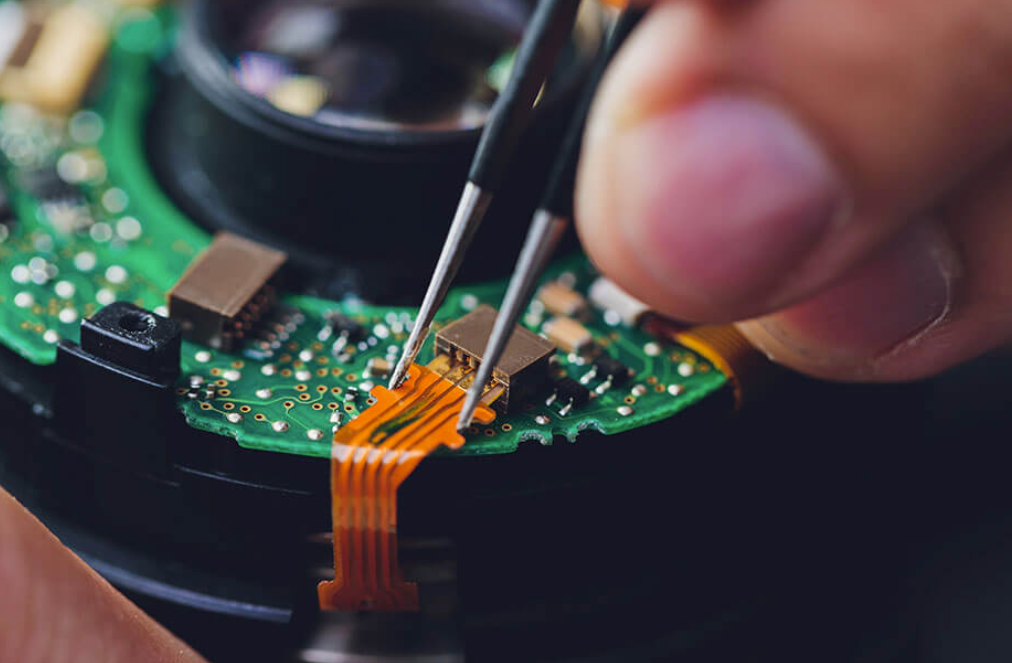
Modern electronics are becoming smaller while being expected to do more. Smartphones contain multiple cameras, sensors, antennas, processors, batteries, and connectivity components inside remarkably compact bodies. Wearable devices have even tighter requirements, while automotive systems, medical equipment, and industrial electronics increasingly need to fit into spaces that do not resemble the flat rectangular layouts associated with traditional circuit boards. As product designers work within these constraints, the physical shape of the electronics has become just as important as the electrical function they provide.
For decades, rigid printed circuit boards offered a dependable foundation for electronic components. Their solid structure made them suitable for conventional enclosures where the available internal space was relatively predictable. But modern product design does not always provide that kind of environment. Components may need to wrap around curved surfaces, pass through narrow spaces, connect moving sections, or follow an enclosure that changes shape. These requirements have encouraged designers to think beyond rigid board layouts and consider circuits that can occupy space in more flexible ways.
This is where flexible PCB manufacture becomes relevant to the changing architecture of compact electronics. Rather than forcing every electrical connection onto a fixed, rigid surface, flexible circuit technology allows designers to consider the available space in three dimensions. The result is not simply a different type of circuit board. It can influence how a product is arranged internally, how components are connected, and how much freedom designers have when deciding the final shape of an electronic device.
Space Has Become a Design Constraint
The shrinking size of consumer electronics has made internal space increasingly valuable. Every millimeter inside a device may already have several competing demands. A battery needs room, processors require appropriate placement, cameras need clear paths, speakers need acoustic space, and thermal components need sufficient room to manage heat.
A rigid circuit board can make these decisions more difficult when the enclosure itself has an irregular shape. Designers may have to leave unused areas simply because a conventional board cannot occupy them efficiently. In some products, this can lead to additional connectors, wires, or separate circuit boards being used to reach components positioned elsewhere.
Flexible circuits offer another approach. Instead of requiring every connection to remain on one flat surface, electrical pathways can follow available spaces within the product. This gives designers more freedom to work around components rather than treating them as obstacles that must fit around a rigid board.
See also: Sofas: The Center of a Comfortable Home
Moving From Flat Layouts to Three-Dimensional Thinking
Traditional PCB design often begins with a relatively simple question: where can the board fit?
Flexible circuit design can change that question into something more open: how can the circuitry follow the product?
This distinction matters in small devices. A flexible circuit can potentially bend around a corner, pass through a narrow opening, or connect two sections positioned at different angles. The circuit therefore becomes more closely integrated with the physical architecture of the product.
This does not mean that flexible boards can be bent without limits. Bend radius, material properties, copper structure, layer configuration, and repeated movement all influence what is practical. However, the underlying flexibility gives engineers another dimension to consider during product development.
Components Can Be Positioned With Greater Freedom
Electronic components do not always need to remain close together. A camera may sit at one end of a device while its processing hardware is positioned elsewhere. Sensors may need to be placed near an external surface, while the main electronics occupy a protected internal area.
With rigid boards, connecting these components can require cables, connectors, or multiple boards. These additions consume space and introduce additional mechanical considerations.
A flexible circuit can provide a direct connection between separated areas while occupying relatively little volume. This can help designers distribute components according to the product’s functional requirements rather than allowing the limitations of a rigid board to dictate the entire internal arrangement.
Fewer Interconnections Can Simplify Internal Architecture
A compact electronic product may contain several circuit boards connected through cables or conventional connectors. Each additional connection introduces another physical component that has to be accommodated inside the enclosure.
Flexible circuits can sometimes replace portions of this arrangement by combining electrical pathways into a single flexible structure. That can reduce the need for certain wires or connectors depending on the design.
The advantage is not necessarily about reducing the number of parts at any cost. Instead, it is about making the internal architecture more deliberate. When electrical connections can occupy less space and follow more direct routes, designers may gain additional freedom when arranging the rest of the product.
Wearables Present a Different Kind of Challenge
Wearable electronics provide a strong example of why physical flexibility matters. Devices worn on the body have to account for movement, comfort, curvature, and limited available space.
A rigid board can provide excellent structural stability, but its fixed shape may not correspond naturally with a curved wearable product. Flexible circuits can be designed to accommodate certain curved or moving environments, making them useful for devices where electronics need to follow the physical form of the product.
This can apply to smartwatches, health-monitoring equipment, connected clothing, fitness devices, and other compact electronics. In these products, circuit architecture cannot be considered independently from how the device sits on or moves with the body.
Repeated Movement Requires More Than Simple Flexibility
One of the most important distinctions in flexible circuit design is the difference between being able to bend once and being able to survive repeated movement.
A circuit may need to flex during assembly but remain largely stationary during normal operation. Another application may require thousands or millions of movement cycles. These situations create very different engineering requirements.
Repeated bending can place mechanical stress on conductive layers and connection points. Designers therefore need to consider bend radius, material selection, copper characteristics, layer construction, and the location of components relative to areas that experience movement.
The flexibility of the material is only one part of the overall design. Reliability depends on how the complete circuit is constructed and how it will behave under its expected operating conditions.
Automotive Electronics Are Becoming More Spatially Complex
Modern vehicles contain electronics throughout the cabin, body, powertrain, safety systems, and infotainment architecture. These systems are often installed in spaces where conventional flat circuit boards are not always convenient.
Automotive electronics also have to deal with vibration, temperature changes, and long operating lifetimes. A flexible circuit may provide a useful way to connect components across confined or irregular spaces while reducing some of the routing challenges associated with traditional wiring.
Applications can include dashboard systems, lighting, sensors, displays, control modules, and other electronics where available space is limited or where components need to be positioned across different sections of a vehicle.
Medical Devices Require Careful Physical Integration
Medical electronics can also benefit from compact circuit architectures. Portable monitoring equipment, diagnostic devices, wearable sensors, and other medical technologies often need to balance functionality with size and usability.
In wearable medical applications, the circuit may need to follow the form of the device or remain comfortable against the body. In portable equipment, reducing unnecessary internal volume can make the overall product easier to handle.
At the same time, medical electronics can involve strict reliability and regulatory requirements. Flexible construction does not remove those requirements. Instead, it introduces another design option that must be evaluated according to the specific application and operating environment.
Flexible Circuits Can Influence Product Form
One of the more interesting consequences of flexible PCB technology is that the circuit can influence the shape of the product rather than simply fitting into a shape that has already been decided.
In conventional development, designers might establish an enclosure and then determine how a rigid board can fit inside it. With flexible electronics, electrical and mechanical design can become more closely connected.
A product might be made thinner because the circuit no longer requires a large rigid surface. Components might be distributed differently because connections can follow curved paths. An enclosure might be designed around a more compact internal arrangement.
This creates a feedback loop between industrial design and electronics engineering. The circuit is no longer necessarily a flat component placed inside the product. It can become part of the product’s physical architecture.
Manufacturing Requires More Controlled Design Decisions
The benefits of flexible circuits also come with manufacturing considerations. Flexible materials behave differently from rigid board materials, and their construction requires attention to mechanical as well as electrical requirements.
Material handling, layer alignment, copper pattern design, bending areas, component placement, and connection methods can all influence manufacturing outcomes. Designs therefore need to consider production requirements early rather than treating flexibility as a simple material substitution.
This is particularly important when a product will be manufactured at scale. A design that works in a prototype may still require refinement before it can achieve consistent production quality.
Miniaturization Does Not Mean Removing Every Millimeter
There is sometimes an assumption that smaller electronics simply require smaller versions of existing components. In reality, miniaturization often involves reorganizing the entire internal system.
A smaller product may require components to move closer together, change orientation, or occupy previously unused spaces. Electrical pathways may need to follow unusual routes. Heat, mechanical stress, assembly access, and serviceability still need to be considered.
Flexible circuits can contribute to this process by providing an adaptable connection layer. Their value comes less from making every component smaller and more from allowing the available space to be used differently.
Flexible PCB Design Is Becoming Part of Early Product Planning
As electronic products become increasingly compact, circuit architecture is becoming relevant much earlier in the design process.
Industrial designers, mechanical engineers, and electrical engineers may need to work together before the physical form of a product is finalized. Decisions about enclosure geometry can affect the circuit, while circuit requirements can influence the enclosure.
This collaborative approach can reduce situations where the electronics are treated as something that simply needs to be squeezed into the remaining space.
Instead, the circuit becomes one of the elements that helps determine how the product should be built.
The Balance Between Flexibility and Reliability
Flexibility provides new design possibilities, but it should not be treated as an automatic solution for every compact electronic product.
Rigid boards remain highly useful where structural stability, component density, cost, and straightforward manufacturing are priorities. Flexible circuits become particularly interesting when the product has spatial, mechanical, or movement-related requirements that rigid construction cannot address as efficiently.
In many cases, the most practical design may combine both approaches. A rigid section can support larger components while a flexible section handles connections between separate areas. This hybrid architecture can provide the structural advantages of rigid boards alongside the routing freedom of flexible circuits.
Where Flexible Electronics Could Go Next
The continued development of compact electronics is likely to create more situations where traditional board shapes become restrictive. Wearable technology, compact medical devices, automotive electronics, robotics, sensors, and increasingly integrated consumer products all place different demands on internal circuitry.
Future development is unlikely to focus solely on making flexible circuits thinner or more flexible. Greater attention will also go toward reliability, manufacturing consistency, high-density connections, material performance, and integration with increasingly complex product structures.
As electronic products continue moving toward unconventional shapes, the ability to design circuitry around those shapes could become a normal part of engineering rather than a specialized requirement.
Final Thoughts
The biggest change brought by flexible PCB technology is not simply that a circuit board can bend. Its greater significance lies in giving engineers another way to think about the physical relationship between electronics and the products that contain them. Instead of treating circuitry as a flat object that must fit inside a predetermined enclosure, designers can consider electrical pathways as part of the three-dimensional structure of the device.
That approach becomes particularly valuable as products become smaller, more wearable, more distributed, and more mechanically complex. Flexible circuits can help connect components across limited spaces, support curved designs, and reduce some of the constraints created by rigid internal layouts. Their usefulness depends heavily on the specific application, but the design freedom they introduce is difficult to ignore.
As electronics continue to disappear into products that are thinner, smaller, curved, movable, or worn directly on the body, circuit design will increasingly need to respond to physical form. Flexible PCB manufacture is part of that transition, helping move electronic architecture away from a strictly flat model and toward designs that make better use of the space available.