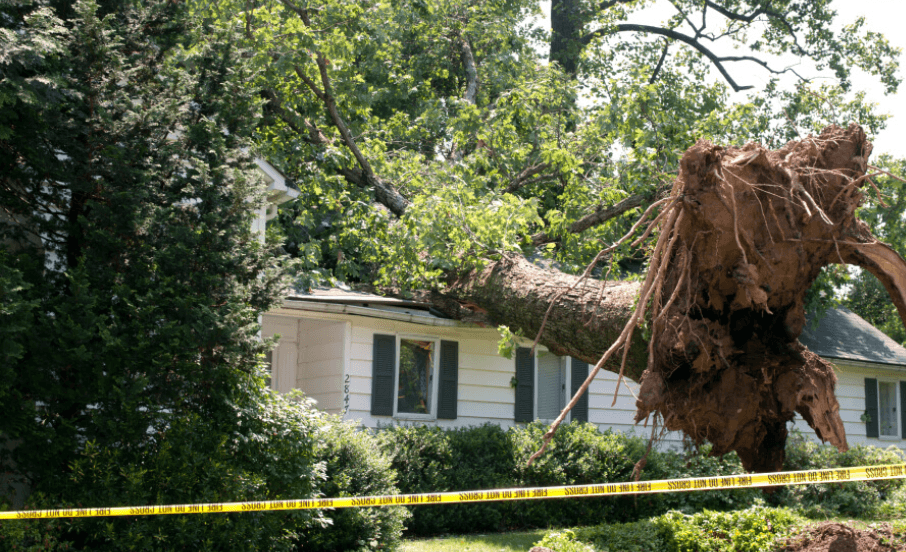
Discovering a fallen tree on your property can be a shocking and stressful experience. Whether it’s the result of a severe storm or another unforeseen event, the sight of a massive tree causing property damage is overwhelming. Knowing the right steps to take immediately can make a huge difference in ensuring your safety, minimizing further issues, and navigating the claims process with your insurance provider. This guide will walk you through exactly what to do, from the first moments after the incident to the final cleanup.
Understanding the Urgency When a Tree Falls on Your Property
When a tree falls on your property, acting quickly is essential. The immediate aftermath of a fallen tree presents numerous potential hazards, from structural damage to your home to live electrical wires. Taking the right first step is crucial to prevent further damage and ensure everyone’s safety.
Your priority should be to assess the situation from a safe distance. Do not rush outside, especially if a storm is still active. A fallen tree can cause instability in your home’s structure, and there could be hidden dangers. If you suspect any risk, contacting emergency services is the safest course of action.
Common Scenarios Leading to Fallen Trees (Storms, Decay, Accidents)
Various factors can cause a tree to fall, but some scenarios are more common than others. Understanding these can help you recognize potential risks around your property. Severe weather conditions are a primary culprit, with high winds and heavy rain saturating the soil and weakening the root systems.
Natural causes, such as disease and decay, can also compromise a tree’s structural integrity from the inside out, making it vulnerable to collapse even in mild weather. Sometimes, a tree that looks healthy on the outside may be hollow or rotten within. Accidents, though less common, can also lead to a fallen tree, such as being struck by a vehicle.
Here are the most frequent reasons a tree falls:
- Storms: High winds, heavy rain, and ice can cause significant storm damage.
- Disease/Decay: Internal rot or disease weakens the trunk and roots.
- Age: Older trees can become more fragile and susceptible to falling.
- Improper Maintenance: Neglecting to prune or care for a tree can increase risk.
Immediate Risks and Hazards Posed by Fallen Trees
A fallen tree is more than just a cleanup hassle; it presents immediate and serious dangers. The most obvious risk is to your home’s structure. If a tree has landed on your roof, it can cause significant structural issues, potentially leading to a collapse. This is why it’s often not safe to remain in your home after such an event.
Another major concern is downed power lines. A tree can easily bring down electrical lines, creating a life-threatening hazard. You should always assume any downed lines are live and keep a safe distance, as the ground around them can be energized. Trying to handle this situation yourself can have fatal consequences.
Other potential hazards to be aware of include:
- Gas Leaks: The impact could damage gas lines.
- Further Damage: The tree could shift unexpectedly, causing additional damage or injury.
- Unstable Structures: Fences, sheds, or other parts of your property might be compromised.
- Blocked Access: The tree could block emergency access to your home.
Essential Preparations Before Taking Action
Before you start making calls or assessing the damage up close, taking a moment to prepare can ensure you handle the situation safely and effectively. Your first priority is always safety, so it is crucial to have the right information and equipment on hand. This will give you peace of mind during a chaotic time.
Gathering your thoughts and having a clear plan will help you communicate effectively with your insurance agent and emergency services. This preparation phase is about making sure you’re equipped to take the next steps without putting yourself or your family at risk. We will now explore the specific safety gear you might need and the important contacts to have ready.
Safety Gear and Equipment You Might Need
While you should never attempt to remove a large fallen tree yourself, having some basic safety gear is important for personal safety when you are near the area. This equipment is not for DIY tree removal but for protecting yourself while documenting the damage or making temporary repairs recommended by professionals.
Your primary focus should be on preventing injury. Heavy branches or debris can be unstable, and navigating the area can be tricky. Without the proper training, attempting any part of the cleanup is dangerous and could cause further damage. Professional services have the specialized equipment and experience to handle the job safely.
For your personal protection while outdoors, consider having this safety gear:
- Sturdy Boots: Protect your feet from sharp debris and provide stable footing.
- Heavy-Duty Gloves: Safeguard your hands from splinters and sharp edges.
- Safety Goggles: Shield your eyes from flying wood chips or dust.
- Hard Hat: Essential if there’s any risk of falling debris from damaged structures or remaining tree parts.
Important Contact Information to Have Ready
In the stressful moments after a tree falls, you don’t want to be scrambling to find phone numbers. Having a list of essential contacts ready can streamline your response and get you the help you need quickly. Your insurance company should be one of the first calls you make to start the claims process.
If there are downed power lines, contacting the local utility company is a critical, non-negotiable step for safety. For the tree itself, you’ll need a reputable company that offers emergency tree removal. It’s wise to have a certified arborist’s number on hand for a professional assessment.
Keep this list of contacts accessible:
- Emergency Services (911): For injuries or immediate dangers like fire or gas leaks.
- Your Insurance Company: To report the damage and begin your claim.
- Your Local Utility Company: To report downed power or gas lines.
- A Professional Tree Removal Service: For safe and efficient removal of the tree.
How do I choose a reliable professional tree removal service?
Choosing the right tree removal company is crucial for ensuring the job is done safely and correctly. Look for a professional tree service with certified arborists on staff, as they have the expertise and proper training to handle dangerous situations. Be wary of “storm chasers” who show up after a weather event offering cheap services; they often lack insurance and may cause more harm. A reputable company will be transparent about removal costs and provide proof of both liability insurance and worker’s compensation.
Getting multiple estimates is a good practice, but don’t let price be the only deciding factor. A company’s reputation, experience, and credentials are far more important. A reliable tree removal company will prioritize safety, have the right equipment, and help you navigate the process without adding more stress to an already difficult situation.
| Feature to Check | Why It’s Important |
| Proof of Insurance | Protects you from liability if workers are injured or your property is damaged. |
| Certified Arborist | Ensures they have the knowledge to assess the situation and remove the tree safely. |
| Good Reputation | Check online reviews and ask for local references to gauge reliability. |
| Written Estimate | A detailed estimate clarifies the scope of work and the removal costs involved. |
Step-by-Step Guide: What to Do Right After a Tree Falls
When you’re faced with a fallen tree, having a clear plan of action is your best defense against chaos. Taking a methodical, step-by-step approach will help you secure the scene, prevent further damage, and get the claims process started on the right foot. The first step is always about ensuring the safety of everyone involved.
Once safety is confirmed, the focus shifts to documentation and communication. Following these steps in order will help you manage the situation efficiently and effectively, from the initial shock to contacting professionals who can help. Let’s walk through each step you should take.
Step 1: Ensure Personal and Family Safety
The absolute first priority when a tree falls on your property is to make sure your family is safe. Before you even think about the damage, account for every person and pet in your household. If the tree has struck your home, evacuate immediately, as the structure could be unstable and at risk of collapse.
Do not rush outside to inspect the damage, especially if the storm is ongoing or it is dark. There could be hidden hazards like downed power lines or unstable branches. Move everyone to a secure location away from the damaged area. If anyone is injured, call emergency services right away.
To ensure personal safety, remember these key actions:
- Account for everyone in the house.
- Evacuate the building if it has been hit by the fallen tree.
- Move to a safe distance from the damaged area and any potential hazards.
- Call 911 for any injuries or immediate threats.
Step 2: Assess the Area for Utilities or Power Line Damage
Once everyone is safe, you must cautiously assess the area for damage to utilities, especially power lines. Fallen trees often take electrical lines down with them, creating an extremely dangerous situation. You must assume any downed wire is live and energized.
Do not go anywhere near a downed power line. The ground around it can be electrified, creating a large, invisible hazard zone. Keep a minimum distance of 50 feet away and call your local utility company immediately to report the danger. Do not touch the tree, any branches, or any objects that are in contact with the wires. This is a job strictly for the professionals from the utility company.
Key steps for dealing with utility damage include:
- Scan the area for any downed power lines or damaged utility boxes from a safe distance.
- Stay at least 50 feet away from any fallen electrical lines.
- Contact your utility company to report the damage immediately.
- Warn others to stay away from the area until professionals arrive.
Step 3: Document the Tree Damage for Insurance Purposes
After confirming the area is safe to enter, your next task is to thoroughly document the tree damage. This evidence is vital for your insurance company and will be reviewed by an insurance adjuster to process your claim. The more detailed your documentation, the smoother the claims process will be.
Use your smartphone or a camera to take numerous photos and videos of the scene. Capture the extent of the damage from various angles. Get wide shots showing the entire fallen tree and its position relative to your house, car, or other structures. Then, move in for close-up shots of every point of impact and all visible damage.
To ensure your documentation is complete, be sure to:
- Photograph the entire tree, including the trunk, especially if it looks rotten.
- Take close-up pictures of damage to your roof, siding, windows, and fences.
- Record video footage, walking around the scene and describing what you see.
- Keep all photos and videos organized for your insurance claim.
Step 4: Notify Your Home Insurance Company Promptly
With your initial documentation complete, it’s time to contact your insurance company. Reporting the incident as soon as possible is crucial for getting your insurance claims process started. Your homeowner’s insurance policy typically covers damage from a fallen tree if it’s due to a covered peril like wind or lightning.
When you speak with your insurance provider, be prepared to share the photos and videos you took. Ask specific questions about your coverage, such as your deductible amount and the limits for tree removal and repairs. Your agent will guide you on the next steps and what they require from you.
Follow these tips when contacting your insurer:
- Call your insurance agent as soon as it is safe to do so.
- Have your policy number ready.
- Provide a clear and concise description of the incident.
- Ask about your specific coverage and follow their instructions precisely.
Step 5: Contact Professional Tree Removal Services
Do not attempt to remove a large fallen tree yourself. This is a dangerous job that requires specialized equipment and expertise. A fallen tree is under immense tension and can shift, roll, or snap back unexpectedly, leading to severe injury or even death. The next step is to call a professional for emergency tree removal.
Look for a reputable tree removal company that is licensed, insured, and has a certified arborist on its team. These professionals can safely assess the situation and remove the tree without causing further damage to your property. They have the training to handle the complexities of a fallen tree.
When looking for a tree removal service, make sure to:
- Verify they are licensed and fully insured (both liability and worker’s comp).
- Ask for a written estimate before any work begins.
- Check for positive reviews or ask for references.
- Avoid hiring unsolicited contractors who appear after a storm.
Deciding Responsibility and Next Steps for Fallen Tree Removal
Determining who is responsible for a fallen tree can sometimes be complicated, especially if a neighbor’s tree falls onto your land. As the property owner, you are generally responsible for what happens on your property, but there are exceptions. Understanding liability is key to figuring out the next steps and who will cover the removal costs.
The question of responsibility is often determined by the tree’s health and the circumstances of its fall. The following section will clarify how liability is decided when a tree crosses property lines, helping you understand your rights and obligations in this tricky situation.
Determining Liability When a Tree Crosses Property Lines
When a neighbor’s tree falls on your property, the question of who pays is a common concern. In most cases, if the tree fell due to natural causes like a storm—often referred to as an “act of God”—you are responsible for the damage to your own property. You would file a claim with your own homeowner’s insurance.
However, the situation changes if negligence is involved. If you can prove that your neighbor knew their tree was dead, diseased, or hazardous and failed to take action, their insurance may be held liable. Proving negligence can be difficult and often requires prior documentation, such as a certified letter you sent to your neighbor about the dangerous tree.
Here’s a breakdown of liability:
- Act of God: If a healthy tree falls in a storm, you are typically responsible for your property.
- Negligence: If the tree was clearly a hazard and your neighbor did nothing, they may be liable.
- Documentation: A certified letter or other written communication can serve as proof of prior notice.
- Insurance: Your insurance adjuster can help determine liability.
Conclusion
In summary, dealing with a fallen tree on your property requires immediate action and careful consideration. Prioritizing safety is crucial—ensure that you and your loved ones are out of harm’s way before taking any further steps. Assess the situation thoroughly, document the damage for your insurance claim, and reach out to reliable professionals for removal. Remember, understanding who is liable for the fallen tree can also influence your next steps. It’s essential to stay calm and organized, ensuring that all necessary actions are taken swiftly. For personalized guidance tailored to your unique circumstances, don’t hesitate to reach out for a free consultation with our experts.
Frequently Asked Questions
Is it safe to stay in my home if a tree has fallen on it?
No, it is generally not safe. A fallen tree can cause significant structural damage that may not be visible, creating a risk of collapse. Prioritize your personal safety by evacuating immediately. If you have any doubts about the stability of your home, it’s best to stay out and call emergency services for an assessment.
Who pays if my neighbor’s tree falls onto my property?
Typically, your own homeowner’s insurance covers the damage. The event is usually considered an “act of God,” so the property owner where the damage occurred files the claim. Liability may shift to your neighbor only if you can prove they were negligent in maintaining a known hazardous tree.
What should I do if the fallen tree has damaged power lines or utilities?
Stay far away from the area. Assume all downed lines are live and dangerous. Do not touch the tree or anything in contact with the wires. Call your local utility company and emergency services (911) immediately to report the downed lines so they can safely handle the situation and prevent further damage.